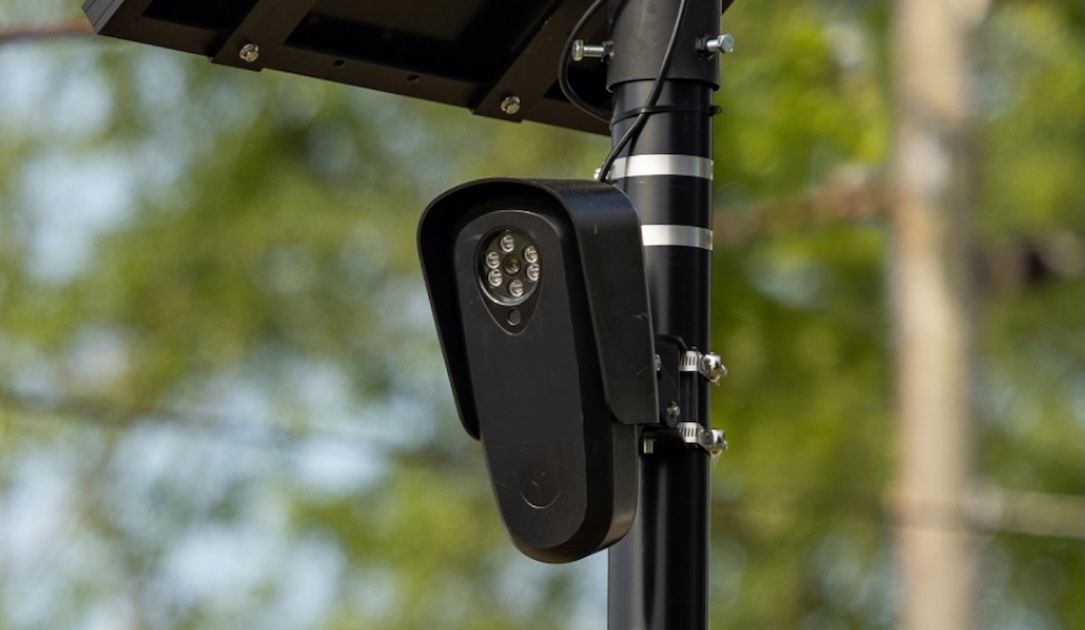
A recent Supreme Court ruling on cell phone location history searches may have a ripple effect on the use of automated license plate readers (ALPRs), according to some legal scholars and ALPR opponents. The ruling, which found that cell phone location history searches require a warrant, addressed fundamental questions about law enforcement's use of private data.
Implications for ALPRs
The Supreme Court's decision in the Chatrie v. United States case has sparked debate about the potential parameters for police use of ALPRs in the future. If a warrant is ultimately needed for ALPR searches, experts say, it would radically limit how the networks of cameras can be used and would change modern policing. Flock Safety, the country's leading ALPR vendor, has between 90,000 to 100,000 cameras installed on public roadways and collects data on about 20 billion license plates a month.
Similarities with Cell Phone Location History Searches
Although the Chatrie case involved Google, which gave police a list of phones inside a so-called geofence where a crime was committed, there are similarities with ALPR data. Michael Soyfer, an attorney at the Institute for Justice, said that the Supreme Court emphasized that the retrospective and indiscriminate nature of the location history surveillance was particularly worrisome - adjectives which also apply to ALPR data.
The Chatrie ruling also bolsters the case against ALPRs because the court focused on what the police had access to globally in their database, according to Soyfer. The justices drilled down on what was in the database and not just what police happened to access at a point in time, he said. The court's really emphasizing that it's looking at the capabilities of the technology overall rather than just what police did with it.
Response from Flock Safety
A spokesperson for Flock Safety said in a statement that the court decision is not relevant to the company. The Supreme Court's decision addresses geofence warrants for Google location history, which is categorically different from license plate recognition technology, the statement said. Google location history involves data from a person's own mobile device and reveals continuous movements across both public and private places.
Flock's ALPR technology, by contrast, captures point-in-time images of vehicles in public view, the statement said. Courts have repeatedly and uniformly treated ALPR differently from technologies like cell site location information and mobile geolocation data, according to the statement. We do not believe this ruling undermines that settled precedent, the statement said.
Indisputably Private Information
In the Chatrie case, the government argued that because the geofence searches involved the collection of data from short timeframes, they did not warrant Fourth Amendment protections. The high court sided with Chatrie, saying that the government is wrong about the incapacity of short-term location information to reveal private matters. Even only a few hours worth of location history can reveal whether a citizen went to an indisputably private place such as the psychiatrist, an abortion clinic, an AIDS treatment center, a strip club, or a by-the-hour motel, according to the opinion.
Location History enables police officers to focus on precisely those sites - to see, in a given time block, who shows up, the opinion said. The fact that license plates are connected to law enforcement networks of personal data that reveal location, travel patterns, and where people live makes ALPR searches similar to cell phone location history searches in important ways, said Andrew Guthrie Ferguson, a law professor at George Washington University and the author of Your Data Will Be Used Against You.
Modern ALPRs are just the connecting point to a much larger system of personally revealing information stored in police and connected public databases, Ferguson said. Those databases often contain not just ALPR data, but also documentation of individuals' social media activity, surveillance video from thousands of public and private cameras, body cameras, and drone video footage, gunshot audio detection sensor data, and police dashboard cameras, Ferguson said. Police also store granular information about people they are tracking in the databases, allowing them to build extraordinarily detailed dossiers.
Source: The Record